
Understanding learning through play
What is play?
What do we mean by "a game"?
According to the dictionary of the Académie française, a game is an activity in which one engages for amusement or entertainment, without anything at stake. Some people think negatively about gambling. Of course, its primary purpose is to entertain, but gambling also plays an important role in our lives.
- In his book Le jeu et l'enfant (1955), psychologist and university professor Jean Château states that "games serve to develop skills in the player, especially the child". Roger Caillois, building on Château's theories, added a more precise and encompassing theory, namely that "play is a source of dynamism in society". Above all, he drew on the work and research of Huizinga, a Dutch historian specializing in cultural history, who, after analyzing the fundamental characteristics of play, demonstrated that it played an important role in the very development of civilization.
Play is more than just a distraction: it's a genuine tool for personal and collective development. Whether it's the child who learns by playing, or the society that builds itself around this dynamic, play is part of our evolution. Far from being futile, it contributes to learning, creativity and social cohesion, confirming its essential role in our lives.
Child psychology and involvement
In his books La formation du symbole chez l'enfant (1945) and La psychologie de l'intelligence (1947), Swiss psychologist Jean Piaget (1896-1980) demonstrates that play is a fundamental driver of intellectual development. Through play, children learn at their own pace, organizing their ideas and thinking.
- Lev Vygotsky (1896-1934), Russian psychologist and educationalist, brings his own vision to the subject in his book Mind in Society (published in 1978, based on his own work). In this work, he stresses the importance of social interaction in a child's development. In his view, group play places the child in a proximal zone of development, where learning is fostered by exchanges with other children and the support of adults.
- These perspectives can be found in more recent research. For example, researchers at the Johns Hopkins Science of Learning Institute have carried out a literature review entitled " Learning through play: a review of the evidence".
- They conclude that play promotes active and sustainable learning, as it combines engagement, motivation and freedom to explore. In other words, the more the educational experience resembles a play activity, the more likely the child is to persevere and retain the information.
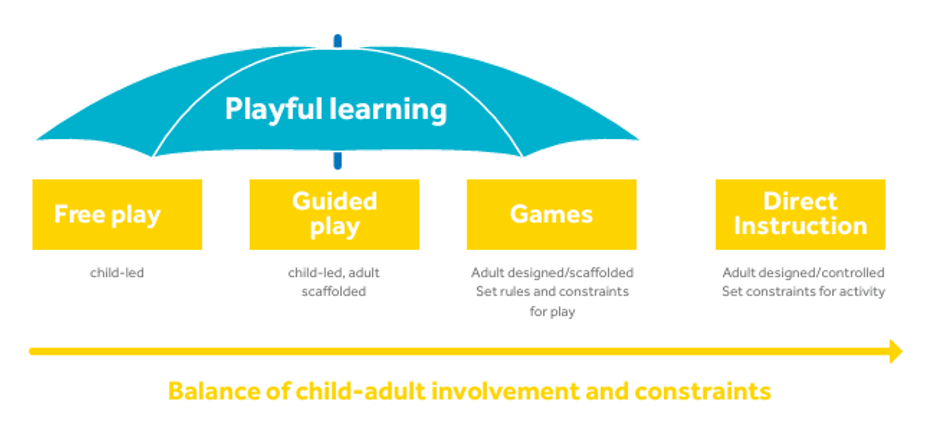
Personalized learning
One of the great strengths of games lies in their ability to take into account the pace and needs of each child. Digital games thus ensure differentiated learning, thanks to the possibility of dynamically adapting the level of difficulty.
- For example, an educational program might propose simpler exercises to complete when the child is experiencing difficulties, or conversely, increase the level of difficulty to encourage greater commitment to progress.
Richard E. Mayer, professor of psychology at the University of California, proceeds in his book "Computer Games for Learning: An Evidence-Based Approach (MIT Press, 2014)", to a systematic analysis of the effects of digital educational games. He shows that interactive games which are based on immediate feedback and personalized progression mechanisms, genuinely promote engagement and perseverance in the face of serious tasks.
These results attest to the fact that a child who learns according to his or her abilities will learn successfully, while at the same time gaining self-confidence, becoming an actor in his or her own success rather than a spectator, making the experience all the more effective and enjoyable.
Games with an educational purpose
Not all games are educational. It's important to distinguish between games created with a pedagogical intention (educational games or "serious games") and those whose vocation is purely recreational. Educational games have precise objectives: learning to solve a problem, developing memory, reinforcing logic or working on cooperation.
- For example, a math game might offer increasingly difficult mental arithmetic challenges, while an interactive history game introduces students to major historical periods through immersive scenarios. These approaches can make learning a pleasurable experience.
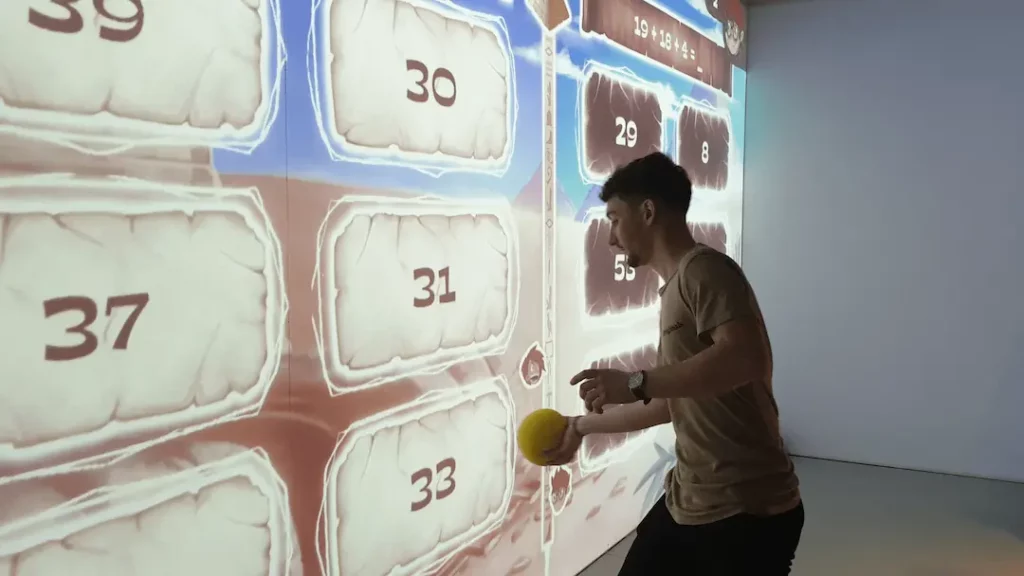
Gamification
Gamification can thus be defined as "the use of game mechanisms in activities outside the field of play" (Deterding, Dixon, Khaled, & Nacke, 2011) such as education or vocational training, one of the most common examples being badges or rankings that increase learner motivation and engagement.
According to Hamari et al (2014), gamification has a positive effect on motivation and, above all, on learner participation, provided that the rewards are not perceived as artificial but as genuine reinforcement of effort. If the student earns a badge or reaches a higher level, the reward is also genuinely thought of as a means of highlighting his or her learning and would unquestionably constitute a form of progression and motivation to the learning path.
The benefits of games for learning
Developmental learning
Play is more than just a means of entertainment: it's a tool for the child's overall development - cognitive (memory, creativity, problem-solving), motor (coordination, fine motor skills), social and emotional (cooperation, emotion management, self-confidence) - especially in a playful way.
- In their article "Why Play = Learning", researchers Hirsh-Pasek and Golinkoff (2008), specialists in developmental psychology, synthesize numerous studies to demonstrate that play fosters autonomy, initiative and curiosity, three fundamental elements in preparing children for lifelong learning.
- In a recent study of children (Lunga 2022) from pre-school development centers in South Africa, he shows that play-based pedagogy fosters the child's overall cognitive, physical, emotional, social, moral and linguistic development, and therefore calls on educators and parents to include regular, structured play in their daily routine as a first condition for benefiting from these effects.
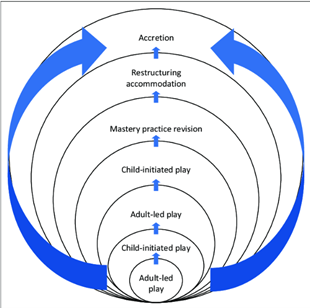
"The theory of play as a spiral of learning
Source : ResearchGate
This underlines the fact that play is not a time for inactivity, but, on the contrary, a field of experimentation and exploration where the child can try, fail, try again, gather new information - these are the stages of everyday learning.
Educational and scholastic learning
Integrated into the school environment, play is a powerful teaching tool. It can even be used to learn vocabulary, mathematics, history or logic. Playful activities foster a climate of memorization: a meta-analysis by Wouters et al. (2013), published in the Journal of Educational Psychology, concluded that serious games have both a positive and measurable impact on motivation and academic performance.
In France, other studies have already demonstrated the effectiveness of role-playing in learning. Among them, a study published in the Journal of Educational Psychology shows that 87% of students learn better when play is integrated into their learning.
Virtual role-playing games create a dynamic environment that encourages students to engage, cooperate and create.
At NeoXperiences, for example, we develop a multitude of educational games: Abakus for mental arithmetic, OXO for logic, Nutriquest for health, all playable on an interactive wall. A well-designed game transforms a sometimes boring setting into an adventurous, motivating and lively learning context.
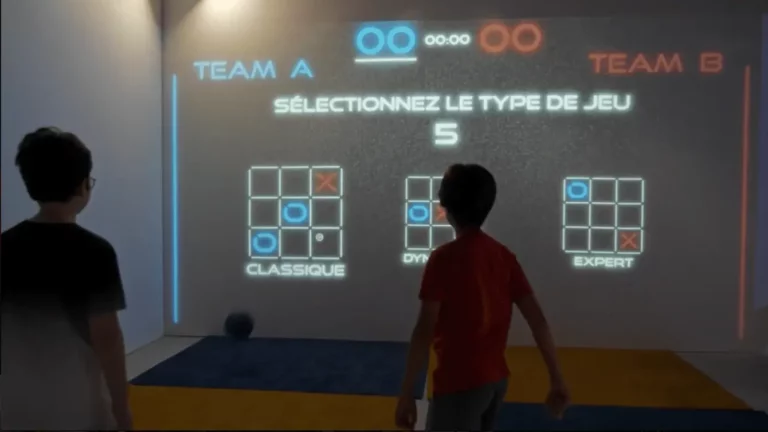
OXO - Logic game on interactive wall
The challenges of technology for adults and children
Gamification touches on a variety of fields, bringing numerous benefits to companies and users alike.
Technology evolution
Digital tools have greatly changed educational practices over the last twenty years. Tablets, serial educational applications, interactive video games, augmented reality and immersive devices open up new experiences and motivate children.
Platforms such as Minecraft: Educational Edition and Kahoot have already transformed thousands of schools around the world, making digital games a central mediator of collaborative and creative learning.
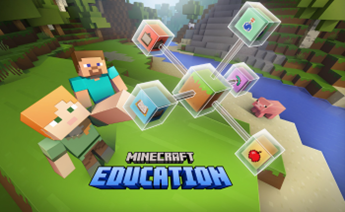
Example of a Minecraft result: Implemented in 2018 by Ecole Sat Paul Mittal as a "Microsoft Showcase School", an Indian establishment based in Ludhiana, the educational edition of the Minecraft game has become a staple in creative learning processes and in the service of interdisciplinary pedagogy.
- Minecraft's impact can be measured in a number of areas. As part of her Master's thesis, our director Ms Bhupinder Gogia, conducted a case study with one of the classes and a sample of 30 students from the third standard and 30 students from the fourth standard.
She observed a significant difference in math results between the groups taught by Minecraft and the traditionally taught group. On the one hand, the students were indeed tested after the teacher had taught the lesson in the traditional way, thanks to a worksheet. The other students, who didn't do so well, were able to challenge them, in the form of game-based learning.
According to a 2021 UNESCO report, almost 90% of countries have made some form of transition to digital learning within the education system, particularly in the wake of the Covid-19 crisis.
Screen time and reduced concentration
Digital technology may offer new perspectives, but it is also a cause for concern.
As a number of studies have shown, too much screen time can affect children's concentration, sleep and social skills. The World Health Organization (WHO), for example, suggests limiting screen time for children under 5 to a maximum of one hour.
- According to the baromètre du numérique 2025 conducted by CREDOC and piloted by Arcep, Arcom, CGE and ANCT, one person in four devotes more than 5 hours a day to personal use of screens.
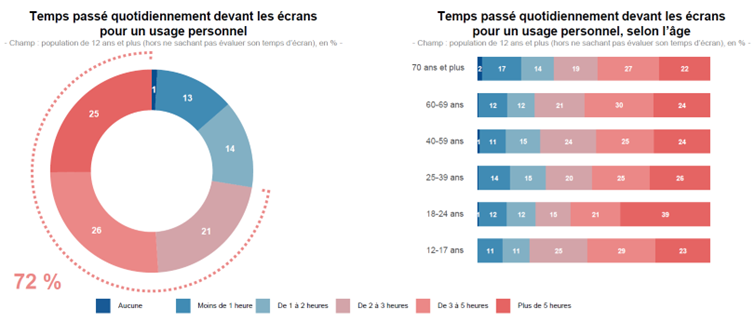
Sources: Arcep
According to the graph, 72% of respondents claim to spend more than 2 hours a day in personal screen use, with 25% spending more than 5 hours, including 39% of 18-24 year-olds. This renewal of digital usage is underpinned by the widespread use of smartphones, which now equip 91% of the population, ahead of computers (89%) and tablets (54%).
These results raise the question of balanced, informed use of digital tools in terms of content and time management at the right age for children.
Reading takes a back seat
The emergence of digital technology and digital games may be perceived by some teachers and parents as something that relegates traditional practices (reading, writing, directing, etc.) to the "closet" in the face of a new "playful" instrument compared to the old "academic" one. Yet research shows that some well-designed digital games actually reinforce certain reading-related skills.
- Mayer (2014), for example, has shown that certain narrative games promote text comprehension and, in particular, the ability to analyze complex information texts, as the child is obliged to lead the narrative by himself in the game's plot, deciphering clues and making reasoned decisions.
Games that use dialogue and video stimulate literacy through dialogue writing as much as through video.
Similarly, interactive games that make children attentive to written instructions invite them to devise sentences from which to extract the words they need for their own lexicon of words to learn in order to read or understand a text. Rather than opposing digital play to reading, it seems clear to us that digital play will be a beneficial and intelligent complement, in which the two devices complement / articulate each other in education.
Edutainment: combining education and technology
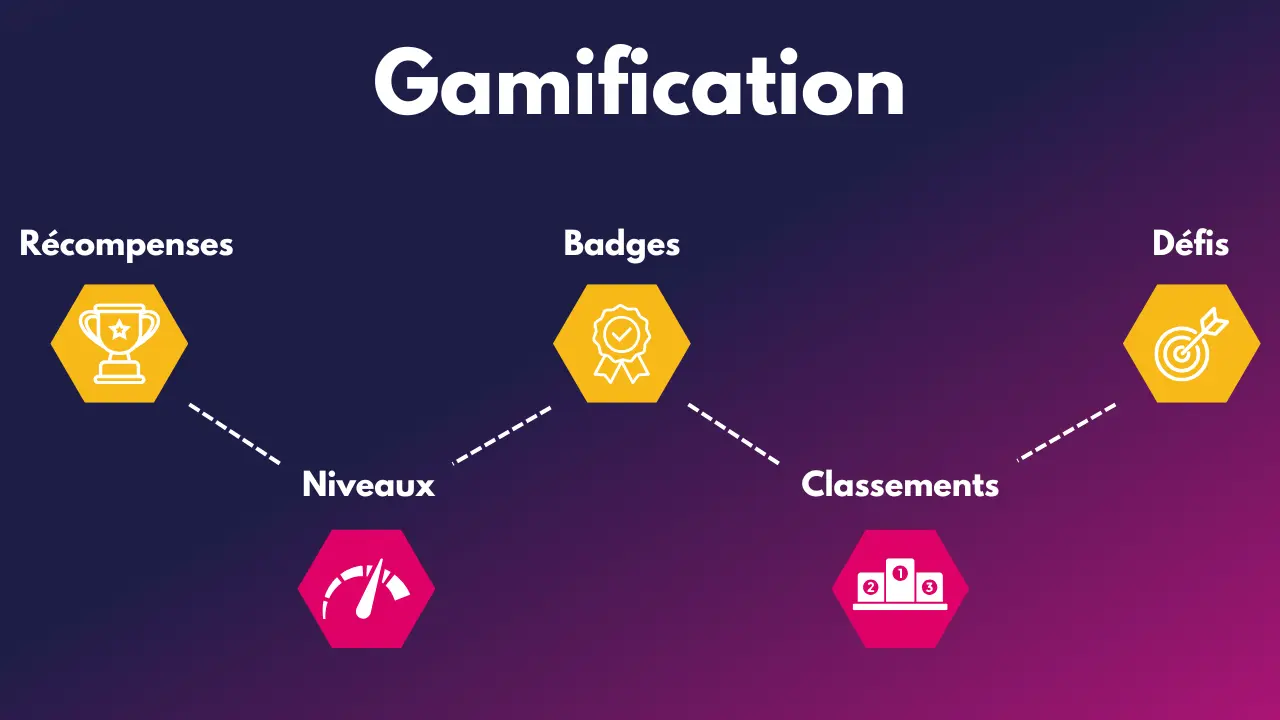
Edutainment is a composite term formed from education and entertainment. It refers to content that combines learning and entertainment to attract the learner's interest and motivation. The concept is simple: the more children and adults enjoy learning, the less they forget, retain and persevere.
For Zosh et al (2018), edutainment enables acting learning because it engages learners in situations where they have to mobilize resources, cooperate, find solutions through reflection or creativity. Interactive digital video games have their place in edutainment. They offer immersive experiences that skilfully combine cognition, creativity and social interaction.
Interactive sports games
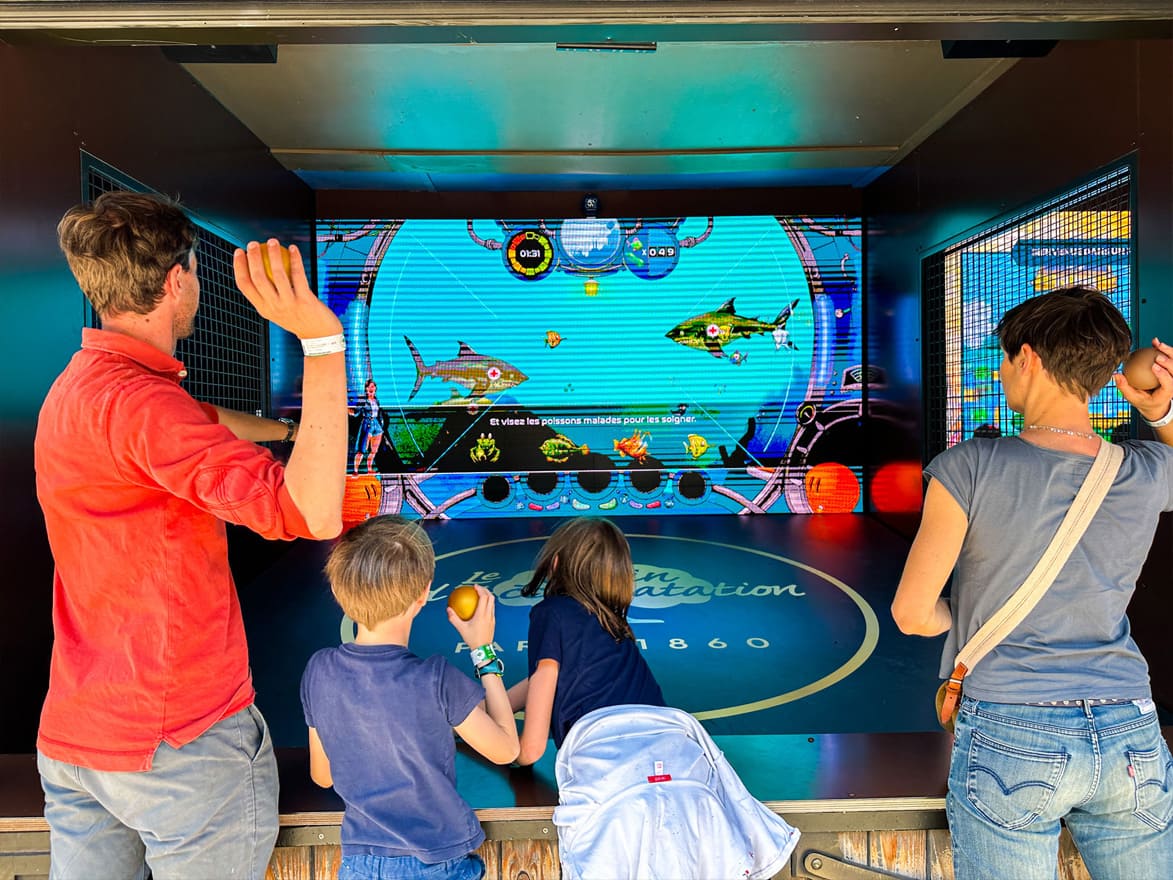
Interactive games immerse children in worlds where they can move, play with their surroundings and learn by trying, by making mistakes. For example, interactive walls create the conditions for groups of children to play joyful games that combine learning and physical exertion.
These solutions are not just fun: they develop coordination of movements, the desire to play together, attention to each other, memory, motivation and the desire to find the solution.
Visit interactive sports games have the advantage of combining cognitive stimulation and physical activity: they feed the toddler's need to exercise, but also preserve his need for a little calm in order to learn. Studies show that using several modalities at the same time (in this case the body and the senses) to learn results in longer retention, on the one hand, and greater engagement in the activity, on the other (Mayer, 2014).
Quiz and puzzle
Short formats such as online quizzes, puzzles or escape games stimulate memorization and logic by providing immediate feedback. Indeed, these little games use the principle of positive reinforcement: the child receives an immediate reward when he or she succeeds, which has the merit of stimulating motivation to continue.
- This is the case, for example, with the educational escape game, which encourages children to solve riddles to unlock a new stage in the story. Beyond logic, or even cooperation and communication when the game is played in a group, since the child wants to get the full answer to the game, and therefore solicit his or her peers.
Cooperation and team games
Team games, whether digital or traditional, help develop social skills. Listening, speaking, negotiating and cooperating are all skills needed to win, but also to be successful in a team game.
- Hirsh-Pasek and Golinkoff (2008) have shown that social interaction during play underpins language development and understanding of the social universe, while creating a positively motivating and secure environment for learning acts.
Educational outings: learning while having fun outside the home
Educational games on interactive wall
Interactive walls are devices that children can mobilize in a group setting to enjoy playful or educational experiences. Interactive walls help develop motor coordination, attention, cooperation and memory.
These devices make learning more lively and engaging for the child, who is on the move and interacting with other individuals while trying to acquire the complete answer to a game.
For example, an interactive wall can feature group quizzes on scientific themes, vocabulary games or fine and gross motor skills activities. These experiences encourage both autonomy and group work, and allow children to mobilize skills learned in class in an attractive, fun context.
Escape Game
Educational escape games are growing in vogue and are emerging as entertainment behemoths in school and extracurricular environments.
A review of 39 studies* carried out in the context of presenting educational escape rooms shows that, outside the targeted disciplinary fields (medicine on the one hand, STEM on the other), and even if the activities of these two purposes retain a greater or lesser degree of involvement on the part of their coordinators, they are widely used to promote learning that is both active and motivating, likely to encourage collaboration, communication and cross-disciplinary skills.
A game with which students remain highly engaged despite the 60-minute duration of the activity (group of 4 to 6 players). It will therefore be important to support the pedagogical objectives with the game stages to maximize the effectiveness of their educational impact.
Studies: https://scottnicholson.com/pubs/erfacwhite.pdf
In conclusion
Games as a learning medium are an effective, proven strategy that meets children's needs while incorporating digital innovations. Whether in the form of board games, digital serious games, interactive walls or educational escape games, games have in common the pleasure and commitment of the learner, for a lasting and effective learning experience.
As long as the right balance is struck between fun, pedagogy and sensible use of screens, play becomes a path to more active, collaborative and, ultimately, motivating learning. Well-designed and supported digital and interactive tools open up new educational opportunities for schools, leisure centers and the home.
Come and discover the NeoXperiences world of interactive solutions that combine fun and learning.
-> To discover our interactive games, explore our NeoXperiences universe.
Sources :
- https://home.fau.edu/musgrove/web/vygotsky1978.pdf
- https://www.researchgate.net/publication/325171106_Learning_through_play_a_review_of_the_evidence
- https://direct.mit.edu/books/monograph/4028/Computer-Games-for-LearningAn-Evidence-Based
- https://www.researchgate.net/publication/237108843_Why_Play_Learning
- https://www.researchgate.net/publication/361081857_Play-based_pedagogy_An_approach_to_advance_young_children’s_holistic_development
- https://www.researchgate.net/publication/263936571_A_Meta-Analysis_of_the_Cognitive_and_Motivational_Effects_of_Serious_Games
- https://blogs-fr.vorecol.com/blog-limpact-des-jeux-de-role-virtuels-sur-lengagement-des-apprenants-dans-les-lms-168956
- Minecraft Education: https://apps.microsoft.com/detail/9nblggh4r2r6
- https://education.minecraft.net/en-us/blog/creative-learning-and-leadership–minecraft-education-edition-at-indias-sat-paul-mittal-school
- https://www.unesco.org/en/articles/renewing-education-transform-future-critical-perspectives-transforming-education-summit-0
- https://www.arcep.fr/cartes-et-donnees/nos-publications-chiffrees/barometre-du-numerique/le-barometre-du-numerique-edition-2025.html
- https://fr.themedialeader.com/barometre-du-numerique-2025-plus-de-4-francais-sur-10-jugent-passer-trop-de-temps-sur-les-ecrans/
Article published by :

Doriane Perly
Doriane Perly is in charge of communications and marketing at Neoxperiences. Curious, bubbly and a jack-of-all-trades, she oversees digital strategy, content creation and marketing follow-up for interactive products. Passionate about showcasing innovative solutions, she enjoys sharing behind-the-scenes stories, news and team successes.
Other posts
In a totally immersive and interactive way, discover a whole new way to play Angry Birds!
With €3.6 million in funding, Neo Xperiences is accelerating its international expansion and aiming for a change of scale by 2028...
In the sporting world, gamification is based on interactive and immersive technologies that encourage players to excel...