Gamification is a concept that blends learning and game mechanics into non-game subjects. If you have questions about gamification and want to know how you can benefit from it, this article explains the principles of gamification, its benefits in different fields, and how you can integrate it into your activities.
What is gamification
Visit gamification is the integration of game mechanics into an activity. Gamification is the process of adding a playful dimension to a non-game activity.
It's a concept that has been democratized over the years thanks to its positive results in terms of user engagement, and is now applied in a number of fields including: wellness, health, leisure, culture, logistics, education, events and many others.
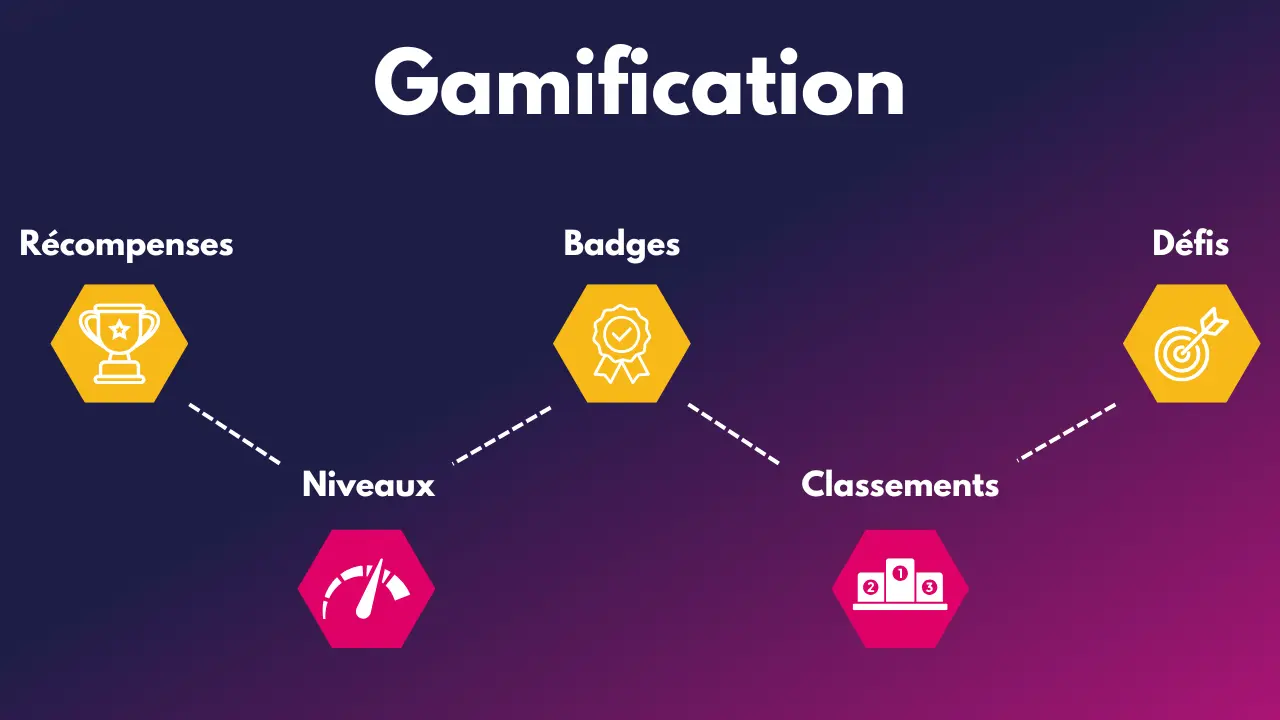
What are the principles of gamification? The principles of gamification are based on video game mechanisms such as :
- The rewards
- Level gain
- Obtaining badges
- Filing system
- Challenges
This system makes the user experience more interactive and engaging. They learn or do an initially serious or mundane activity while having fun. This is what keeps the attention and commitment of corporate customers or employees over the long term.
Example: There are solutions for physical rehabilitation with a system of points, levels and daily challenges to encourage patients to do their exercises. With each session completed, they unlock new "bonus" movements and virtual badges, making the whole thing more motivating and fun, even if they're just looking to regain their limbs' abilities.
Origins and evolution of gamification: mechanics based on video games
According to the Greek historian and geographer Herodotus, the history of gamification dates back to the 16th century BC. The ruler of Lydia (Asia Minor, now western Turkey), King Atys, and his people faced a famine crisis due to disastrous weather conditions. After several years without a solution, the king and his subjects came up with an idea. To take their minds off the famine, they invented jacks, dice, balloons and other objects. To accompany them, they invented rules, teams and victory conditions. The goal was simple: beat your opponent.
King Atys then set up a system for his people: every other day, the Lydians had to eat half a ration, and the next day, instead of eating, they had to play. The aim was to boost morale and make them forget the famine. The results were positive: the people fell asleep more easily after a day spent playing, and were more motivated and more united. This process enabled the king and his people to survive the famine for over 18 years! They were so captivated by the game that they forgot all about hunger.
Gaming" reached a turning point in 1978. A student by the name of Richard Bartle created the very first online game, MUD1 (Multi-User Dungeon 1). This was a narrative role-playing game featuring challenges and quests in a virtual world, plus interaction between players embodying characters.

This shift from gamification to the modern era was achieved by integrating real-life situations into a virtual world. Gamification then continued to develop, and the term "gamification" was democratized in 2010, when an American game designer envisioned our daily activities accompanied by point systems and rewards.
Some examples and results
Take Duolingo, for example. An application conceived and created by Luis von Ahn, the creator of reCAPTCHA, and his student Severin Hacker. Duolingo uses gamification to make learning more fun and build user loyalty. Specifically, the application incorporates a system of daily series where users earn points and XP (experience to increase their account level). There's also a leaderboard and a social tracker so you can see your progress and that of your friends.
Result:
- There has been an increase in user usage, from 20% to 30% after 2022.
- The dropout rate, meanwhile, has fallen from 47% to 37% in 2023, with a retention rate of 63%.
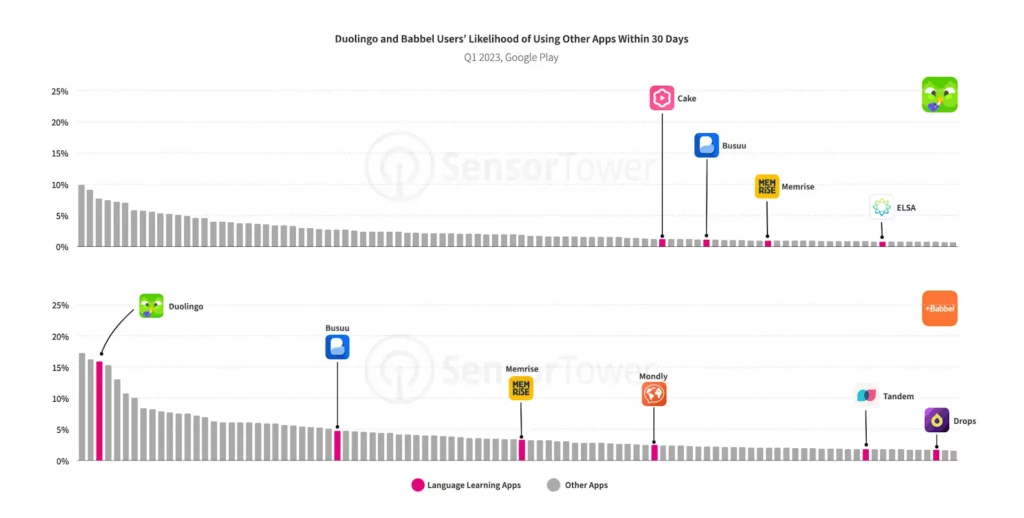
To better understand this data, let's look at application retention and abandonment rates in general.
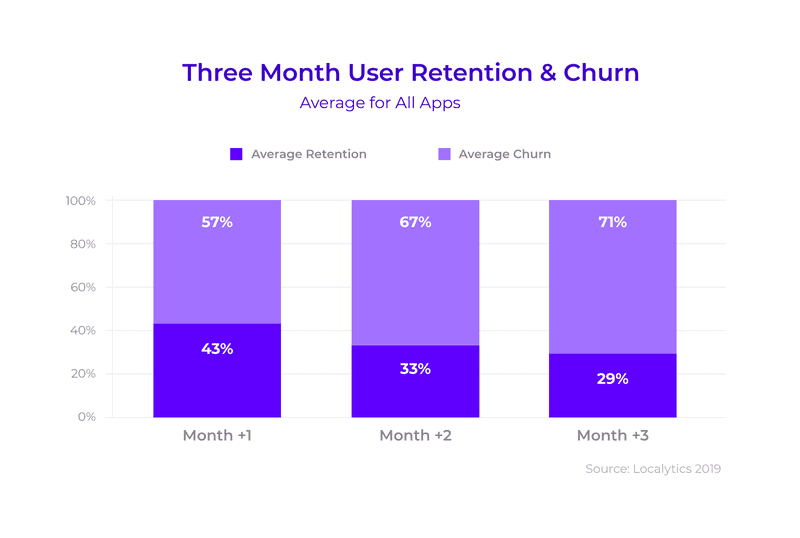
According to an analysis by Localytics, any application sees its retention rate drop between the first and third month. According to this data, by the third month, fewer than 3 out of 10 users remain active.
- Duolingo's game-like mechanics have won it a growing number of loyal users. Its users are unlikely to use any other language application, whereas users of other applications use Duolingo.
Another example would be Nike Run Club. An app for running and training that keeps you motivated. How do you motivate your users? Nike has also opted for gamification. How did they implement gamification?
- Unlocking steps
- Reward systems
- Leaderboard (user ranking by points): increases competitiveness
- Social bonding: sharing and exercising in a group, with family or friends
- Time-limited challenges with prizes: this time-limited system increases user participation and motivation.

Thanks to this gamification, Nike Run Club has seen its increased its retention rate by 21 and maintained its position among the top running apps.
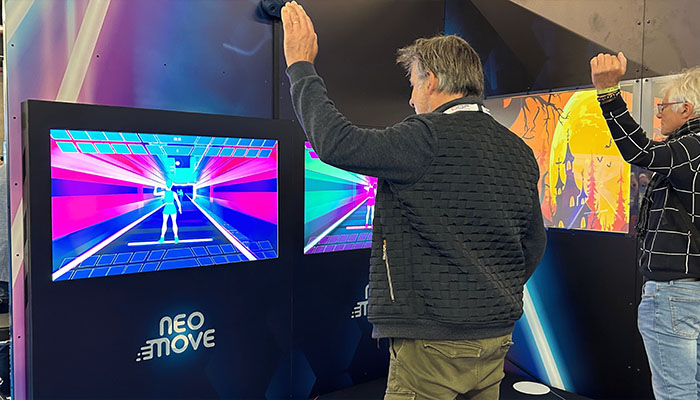
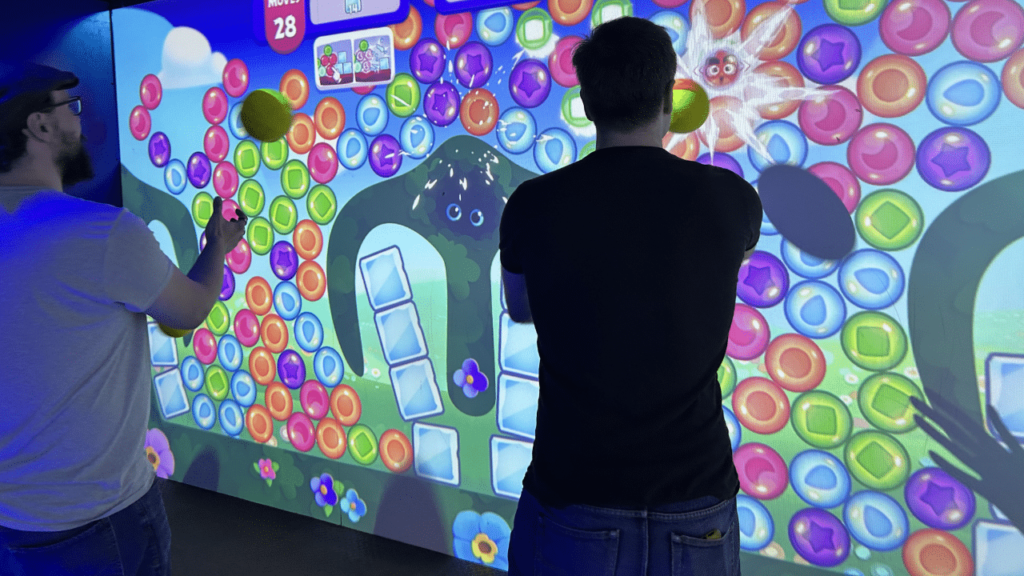
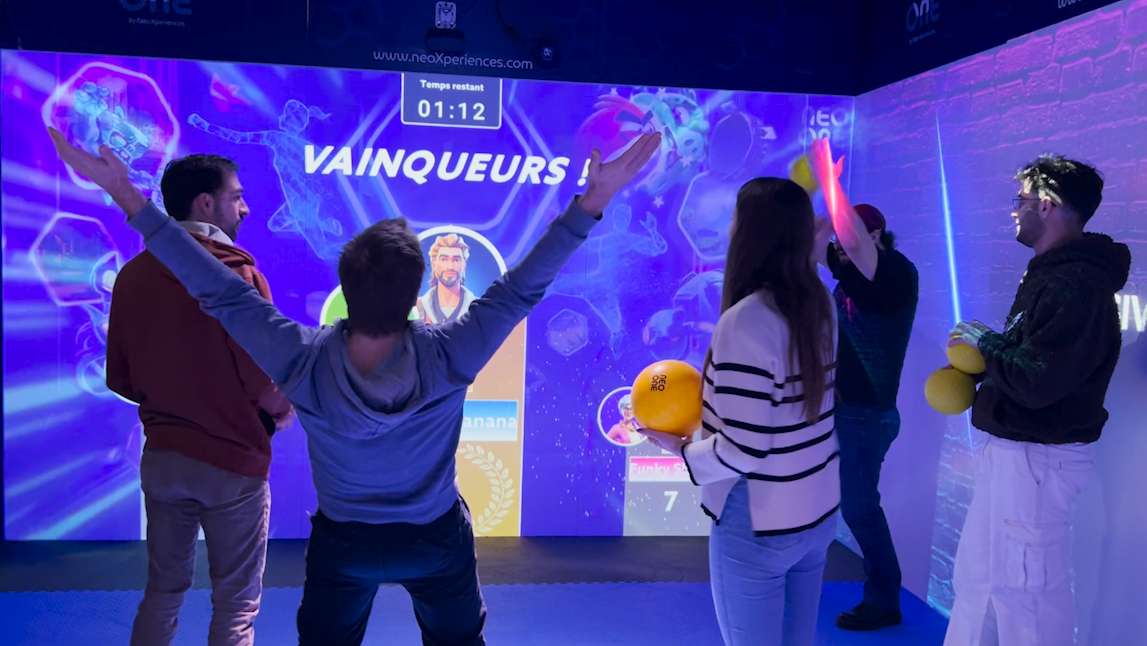
At NeoXperiences, we exploit the concept of gamification via interactive wall technology to create interactive and immersive experiences in games, education and sports.
The benefits of gamification in different sectors
Gamification touches on a variety of fields, bringing numerous benefits to companies and users alike.
When gamification meets education
In the education sector, the many benefits of gamification need no further demonstration. Some even refer to it asedutainment. According to a survey by the New Media Consortium, gamified training devices make students 34% more involved than traditional training. Thanks to mechanisms such as badges, rankings and other rewards, students are encouraged to stay motivated and complete the various missions proposed to them.
One example is the serious games used in primary, secondary and university education. These games, which aim to educate while having fun, are gaining in popularity. Platforms such as Duolingo, which lets you learn a language through games, have helped to make learning more fun and more effective.
When gamification meets sport
Gamification in sports is also very common, especially in fitness applications. This is known as sportainement. Platforms such as Nike+, Strava and Fitbit use gaming elements to motivate their users. For example, challenges are issued to participants, enabling them to compare their performance with that of other users through a ranking. A study by Harvard Business Review shows that users who take part in gamified challenges increase their physical activity by an average of 27%.
Visit interactive walls and interactive interactive sports gamessuch as those developed by NeoXperiences, offer more immersive and engaging experiences for sports enthusiasts.
Gamification in the workplace: boosting employee commitment
Companies have realized the importance of gamification in boosting employee engagement. A Gallup study reveals that only 15% of employees worldwide are truly engaged in their work, resulting in lower productivity. The implementation of gamification in talent management platforms or training programs has shown that employees motivated by rewards and progression objectives were 48% more productive.
Companies like Salesforce use gamification to encourage employees to achieve their business goals. Teams can earn badges, points and even travel rewards for their performance, creating a more dynamic working environment.
Gamification in marketing: creating unique experiences
In marketing, gamification helps to strengthen customer loyalty while increasing interaction. One emblematic example is Starbucks, which has integrated a gamified rewards system into its loyalty program. According to a Loyalty360 study, customers who participate in gamified loyalty programs spend 47% more per visit than customers who do not.
Dynamic displays and gamified interactive installations, such as interactive walls, are increasingly used in events and stores. These devices offer a personalized experience for customers, creating a stronger connection with the brand. For example, an interactive wall can feature live games where participants can win rewards or promotions in real time, boosting visitor engagement.
Find out more by reading our dedicated article on gamification marketing
How can gamification be integrated into your business?
The integration of gamification into a company depends on the objectives, the target audience and the resources available. Here are a few steps for integrating gamification.
Identify objectives and target audience
Before you begin integrating gamification, it's essential to fully understand your objectives. objectives. Are you looking to :
- Increase user engagement
- Improving employee training
- Strengthen customer loyalty
- Encourage the purchase of products/services?
Once the objectives are clear, you also need to determine the target audience (children, adults, employees, customers) in order to choose the most appropriate game mechanisms.
Choosing the right game mechanics
- Visit game mechanisms are varied and need to be chosen according to objectives and audience. Once these parameters have been determined, elements such as badges, rewards, rankings, challenges or levels can be added to encourage participation and increase motivation.
- The use of interactive technologiessuch as interactive walls or gamified mobile applications, can be a real lever for enriching the experience and boosting engagement.
Measuring and analyzing results
- It's important to measure the results of your gamification strategy. It's a good idea to use analysis tools to assess the impact of your strategy on user engagement, employee productivity and sales. By measuring the results, you can adapt your game mechanics to make them even more effective.
Gamification technologies
Thanks to advances in technology, many forms of gamification are emerging.
Applications
Interactive tablets and game boards
The interactive tablets and gaming tables are powerful tools for introducing gamification into physical environments such as playgrounds. They enable users to engage in playful, educational or sporting activities.
Interactive walls
Visit interactive walls are installations that transform any space into a dynamic playground. These installations create immersive experiences that can be used for educational activities, sports challenges or puzzle games. These installations are ideal for retail and leisure parks, where they can be used to create all-public activities or customized games.
Gamification and augmented/virtual reality
The integration of augmented reality or virtual reality with gamification opens up infinite possibilities for even more immersive and entertaining experiences. These technologies enable the creation of virtual environments where users can interact and progress through levels or challenges.
Sources :
- Gamification of duolingo
- duolingo's success
- How can gamified applications boost brand engagement and attitude? The case of the Nike Run Club application
- Exploring the adoption of the Nike+ Run Club application: an application of the theory of reasoned action
- Nike Run Club example of gamification
- Gamification
- The history of gamification
- Mud1
Article published by :

Doriane Perly
Doriane Perly is in charge of communications and marketing at Neoxperiences. Curious, bubbly and a jack-of-all-trades, she oversees digital strategy, content creation and marketing follow-up for interactive products. Passionate about showcasing innovative solutions, she enjoys sharing behind-the-scenes stories, news and team successes.
Other posts

Caen-based company selected to join Europe's first incubation platform dedicated to sport
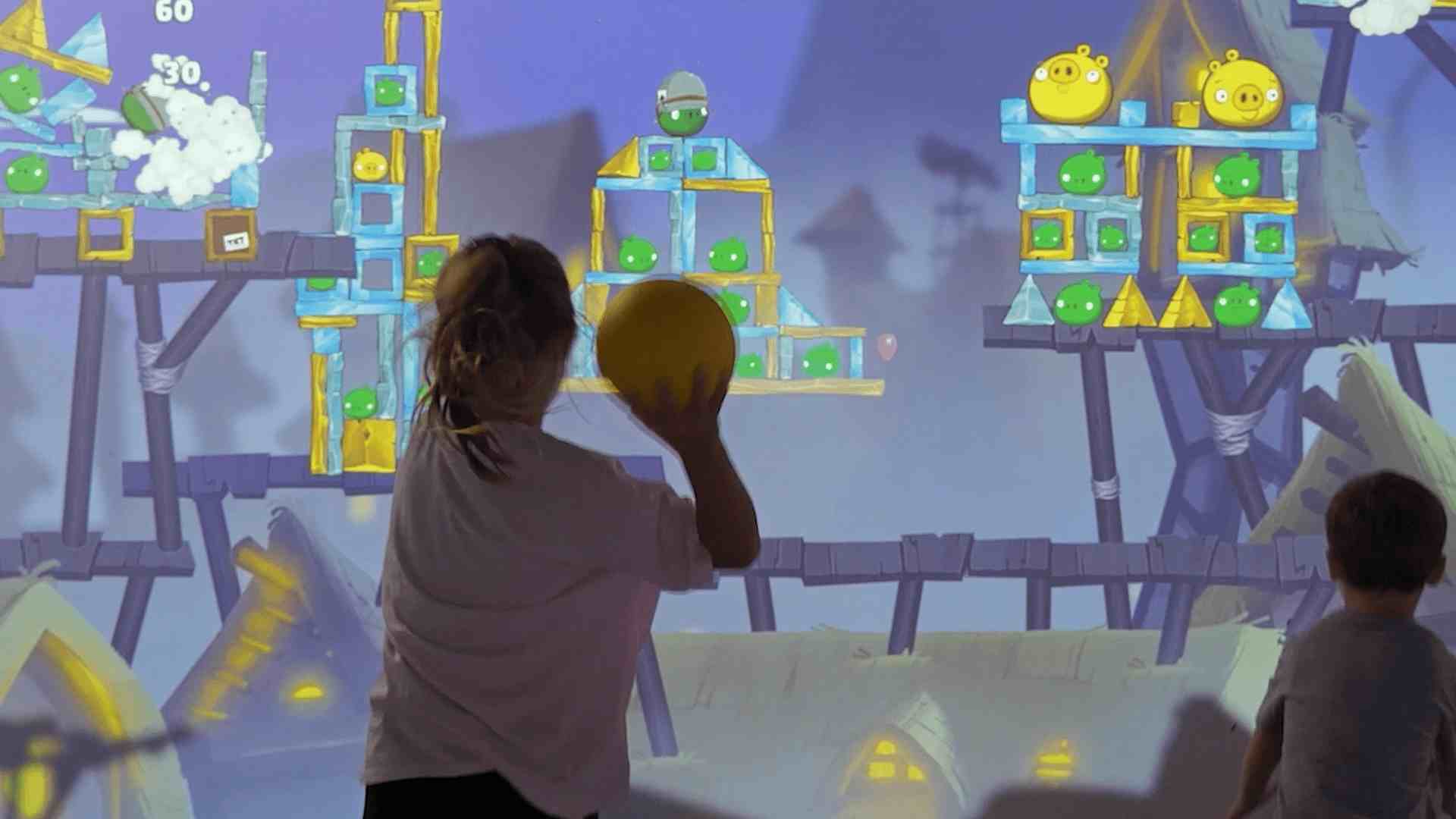
In a totally immersive and interactive way, discover a whole new way to play Angry Birds!
What is social gaming? Social gaming refers to all forms of gaming that encourage interaction between players, whether ...